Tummy Shield
Customer Testimonial
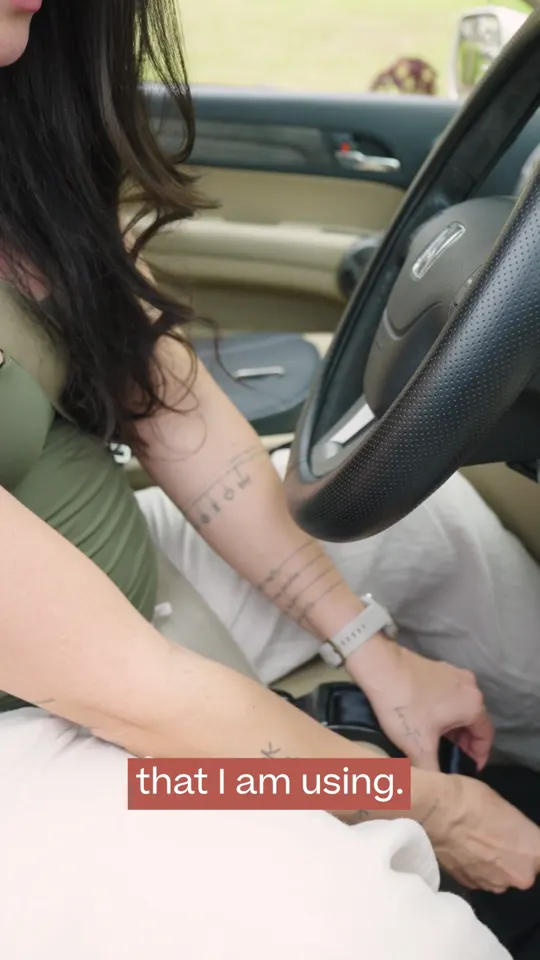
A mum-to-be explains why she uses it, in her own car, in her own words.
Customer testimonials that sound like conversation, because we interview instead of script.
Content Department films customer testimonials in Sydney, on site or in our studio. Everyone can tell when a customer is reading. The job is getting a real sentence out of a nervous person in twenty minutes, then cutting it tight.
Two testimonials for Tummy Shield, a seatbelt positioner for pregnancy: filmed in the car where the product is used, and captioned for sound-off feeds.
A mum-to-be explains why she uses it, in her own car, in her own words.
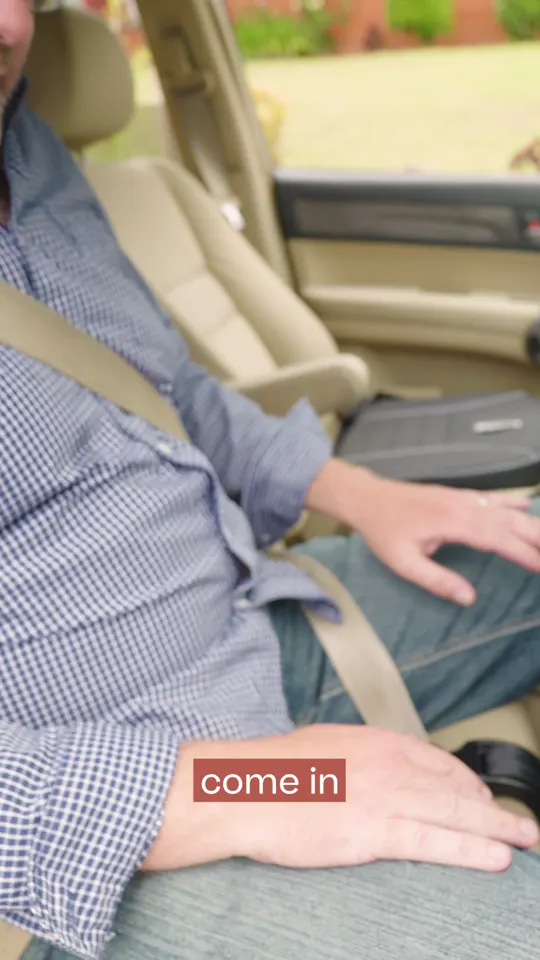
A customer walks through how the product fits and why it matters, shot in the car.
The mistake is filming for an hour and hoping. A nervous customer gets worse the longer you keep them there, and the good answer almost always comes in the first fifteen minutes.
We prepare properly, shoot fast, and batch several customers into a single day so the cost per testimonial stays sane.
Nobody is on camera for more than half an hour.
You give us six customers, we call them, and we tell you which four will be good on camera.
Themes shared in advance, never a script. A nervous customer with a script is the worst outcome.
Four to six testimonials in a day, twenty minutes each, studio or on site.
Short hero cuts plus vertical crops and quote cards from the same footage.
One testimonial costs nearly as much as three. Three is the sensible minimum.
One shoot day, three customers, three cuts plus crops.
The tier most people should pick. Enough voices to cover every objection.
A fresh batch every quarter, so the proof never goes stale.
Tell us what it has to do, where it runs and when you need it. You get a fixed written quote before anything starts, and we will tell you if a smaller package does the same job.
Thirty to sixty seconds for anything that runs on a site or in an ad. If it needs to be longer, it is probably a case study.
It happens and it is usually recoverable. We change the question, drop the camera out of their eyeline, and talk for a minute. If it still is not working we stop; a bad testimonial is worse than none.
Usually not, and paying can make the testimonial less credible. A copy of the film they can use themselves is normally enough.
Every case study is written up end to end: the brief, the decisions and what the work did.
Send us six names. We will tell you which ones will be good on camera.